

Blog Details
Skill Development Scams in India: An Evidence-Based Overview (2015–Present)
Skill Development Scams in India: An Evidence-Based Overview (2015–Present)
Introduction
Skill development has been a cornerstone of India’s employment and economic growth strategy over the past decade. Flagship initiatives such as Skill India Mission, Pradhan Mantri Kaushal Vikas Yojana (PMKVY), and various state-led skill development programs were designed to bridge skill gaps, improve employability, and create a future-ready workforce.
However, alongside genuine impact and success stories, the sector has also witnessed recurring instances of misuse, irregularities, and alleged scams. These issues, reported through audits, investigations, and media coverage, have raised serious questions about governance, implementation quality, and accountability within the skill development ecosystem.
This blog presents a neutral, evidence-based overview of skill development-related scams and irregularities reported in India from 2015 to the present, focusing on patterns, root causes, and lessons for the future.
Background: Growth of the Skill Development Ecosystem
Since 2015, India’s skill development landscape has expanded rapidly:
- Launch of PMKVY with outcome-based funding
- Creation of Sector Skill Councils (SSCs)
- Public–Private Partnership (PPP) model for Training Partners (TPs)
- Large-scale digital platforms for enrolment, assessment, and certification
While this expansion enabled scale, it also increased complexity—creating gaps in monitoring and enforcement that were later highlighted in audits and investigations.
Nature of Irregularities Reported (2015–Present)
Based on publicly available audit reports, law enforcement actions, and credible media investigations, the following types of irregularities have been repeatedly reported:
1. Ghost Trainees and Inflated Enrolments
- Enrolment of non-existent candidates
- Use of duplicate or fabricated Aadhaar and identity records
- Claiming training completions without actual attendance
2. Fake or Exaggerated Placement Claims
- Submission of forged appointment letters
- Short-term or informal engagements shown as formal placements
- Recycled placement data used across multiple batches
3. Non-Functional or Paper-Only Training Centres
- Training centres operating only during inspections
- Lack of qualified trainers, equipment, or infrastructure
- Multiple centres registered at the same address
4. Financial Misreporting and Inflated Invoices
- Overstatement of training costs
- Duplicate claims for assessments and certifications
- Misuse of mobilization and placement-linked incentives
5. Digital and Identity Fraud
- Fake PMKVY or Skill India websites
- Impersonation of government or NSDC-authorised entities
- Collection of fees from candidates using fraudulent portals
Role of Audits and Investigations
CAG and State Audit Findings
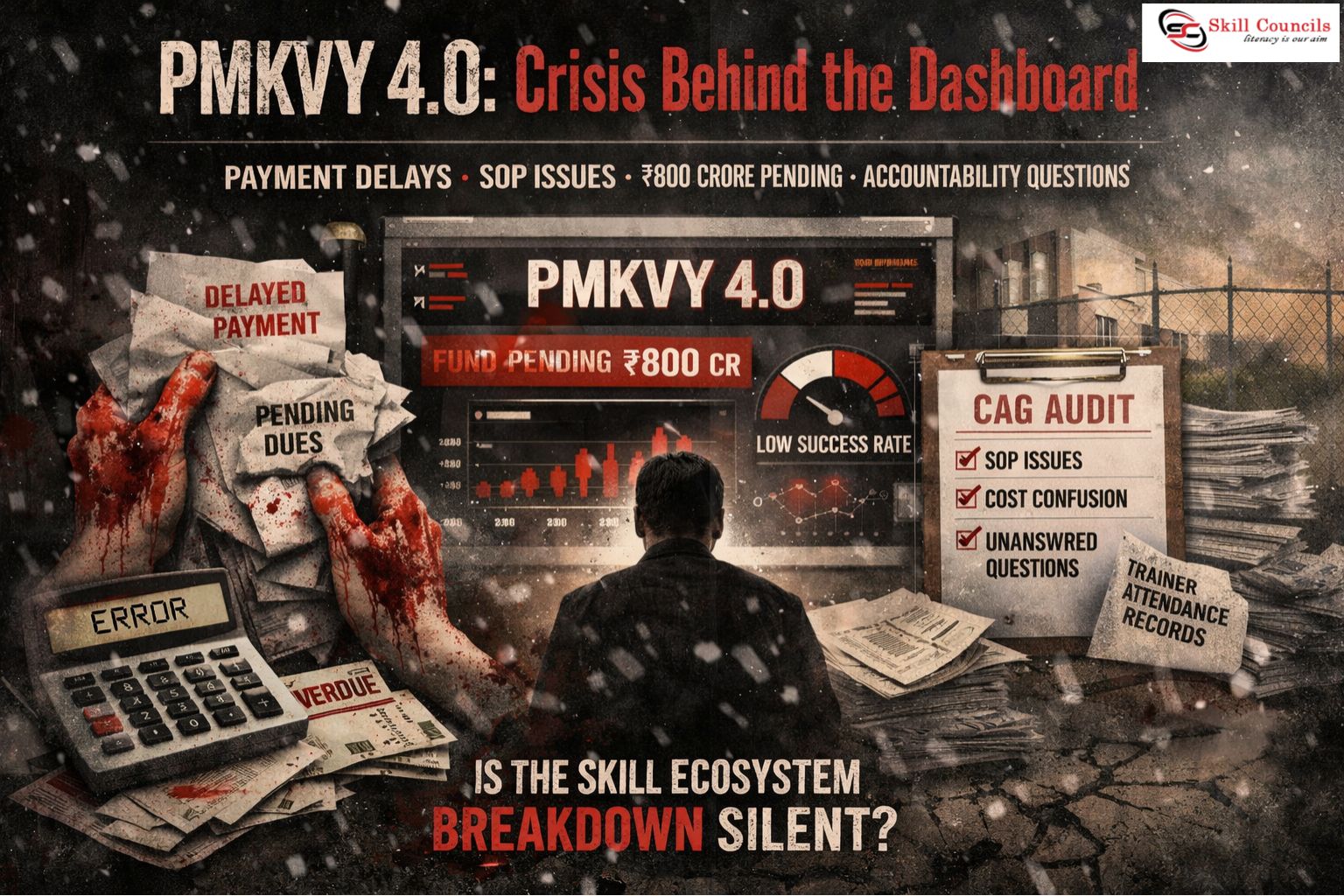
Several state-level compliance audits by the Comptroller and Auditor General (CAG) and state audit departments have flagged:
- Undue financial benefits paid to training partners
- Weak verification of placement outcomes
- Delays in recovery of identified irregular payments
These reports often recommended stricter monitoring, recovery mechanisms, and legal action where applicable.
Law Enforcement Actions
- FIRs and criminal complaints filed by state police and central agencies
- Investigations into organised fraud networks using fake portals and documents
- Blacklisting of training partners and assessment agencies
Ministry and NSDC Actions
- Suspension and blacklisting of non-compliant Training Partners
- Public advisories warning candidates against fraudulent entities
- Introduction of stricter inspection and monitoring protocols
Systemic Challenges Identified
The recurrence of such issues points to deeper structural challenges:
- Over-reliance on self-reported digital data without physical verification
- Scale over quality during rapid program expansion
- Limited field-level inspection capacity
- Inconsistent enforcement across states
- Low awareness among candidates about authorised centres
These challenges are not unique to skill development but are common to large-scale public welfare programs.
Impact on Genuine Stakeholders
Irregularities in the system adversely affect:
- Ethical training providers following compliance norms
- Candidates whose certifications or placements lose credibility
- Employers facing skill-quality mismatches
- Public trust in government-led skilling initiatives
Addressing these issues is essential to protect the credibility of the sector.
Reforms and Course Corrections
Over time, several corrective steps have been initiated:
- Strengthening of monitoring and inspection frameworks
- Use of technology such as geo-tagging and biometric attendance
- Increased emphasis on third-party assessments
- Outcome validation through employer verification
- Periodic review and rationalisation of training partners
While these measures show progress, consistent implementation remains critical.
Way Forward: Building a Transparent Skill Ecosystem
To ensure long-term sustainability and trust, the skill development ecosystem must focus on:
- Transparency and public disclosure of audit outcomes
- Data-driven risk profiling of training partners
- Strong grievance redressal mechanisms for candidates
- Capacity building of regulators and inspectors
- Collaboration with industry for genuine placement validation
Conclusion
Skill development remains vital for India’s demographic dividend and economic future. The instances of scams and irregularities reported since 2015 highlight not a failure of intent, but gaps in execution, monitoring, and accountability.
By learning from past challenges and strengthening governance frameworks, India can ensure that skill development programs deliver real outcomes—empowering youth, supporting industry, and safeguarding public resources.
At SkillCouncils.com, we believe informed dialogue, transparency, and ethical practices are essential to building a credible and impactful skill development ecosystem.
Disclaimer: This article is based on publicly available information from audit reports, official statements, and credible media sources. It does not allege wrongdoing by any specific individual or organisation unless established through official findings.

Recent Blogs
 in India Structure, Role, and Opportunities for Stakeholders.jpg)

.jpg)
.jpg)