
Blog Details
.jpg)
Skill Development Landscape in India: Policies, Schemes, Funding, Eligibility & Impact Analysis (2020–2025)
Skill development India, Skill India Mission, PMKVY funding, NSDC role, MSDE schemes, skill development eligibility India, apprenticeship schemes India, skill funding India 2020-2025, vocational training India policy
Skill Development Landscape in India: Policies, Funding, Schemes & Impact (2020–2025)
India’s skill development ecosystem has undergone rapid transformation over the past decade, driven by demographic pressure, technological disruption, and the need for employability-led growth. With over 75% of the population in working age, skilling has become central to India’s economic strategy.
This article provides a comprehensive analysis of India’s skill development ecosystem, including policies, authorities, schemes, funding allocation, eligibility criteria, and emerging trends.
📊 1. Evolution of Skill Development in India
India’s skill ecosystem evolved significantly after:
- National Skill Development Policy (2009)
- National Skill Development Mission (2015)
- Launch of Skill India Mission (2015)
The mission aims to train 30+ crore people and align workforce skills with industry demands.
👉 Earlier, vocational training was underdeveloped, but post-2010 reforms brought structured institutional frameworks and PPP models.
🏛️ 2. Key Authorities & Institutional Framework
🔹 Ministry of Skill Development & Entrepreneurship (MSDE)
- Apex policymaking body
- Designs national schemes and allocates funds
- Oversees implementation across India
🔹 National Skill Development Corporation (NSDC)
- Public-private partnership (PPP model)
- Government holds 49%, private sector 51%
- Functions:
- Funding training providers
- Partnering with industries
- Managing Sector Skill Councils (SSCs)
🔹 National Skill Development Fund (NSDF)
- Acts as funding pool for skill initiatives
- Receives contributions from government & private sector
- Funds routed via NSDC
🔹 Sector Skill Councils (SSCs)
- Industry-led bodies
- Define occupational standards
- Develop Qualification Packs (QPs)
🔹 NCVET (Regulator)
- Standardization, accreditation, certification
⚙️ 3. Major Skill Development Schemes in India
🔸 Pradhan Mantri Kaushal Vikas Yojana (PMKVY)
- Flagship scheme
- Focus: Short-term training & Recognition of Prior Learning (RPL)
- 75% funds via NSDC, 25% via states
🔸 National Apprenticeship Promotion Scheme (NAPS)
- Incentivizes employers for apprenticeship training
🔸 Jan Shikshan Sansthan (JSS)
- Focus on rural, neo-literate, and marginalized groups
🔸 Craftsmen Training Scheme (CTS)
- ITI-based long-term technical training
🔸 Emerging Programs
- PMKVY 4.0 (digital + AI focus)
- Skill hubs, Centres of Excellence (AI, Industry 4.0)
👥 4. Eligibility Criteria
✅ Beneficiaries (Trainees)
- Indian citizens (typically 15–45 years)
- School/college dropouts
- Unemployed youth
- Women, SC/ST, minorities (priority groups)
- Workers eligible for RPL certification
✅ Employers / Training Partners
- Registered organizations (TPs/TCs)
- Industry partners for apprenticeship
- CSR implementing agencies
- Educational institutions (ITI, Polytechnic, Colleges)
💰 5. Funding Allocation & Utilization (Last 5 Years)
📊 Government Expenditure under Major Schemes (₹ Crore)
|
Scheme
|
2019-20
|
2020-21
|
2021-22
|
2022-23
|
2023-24
|
|
PMKVY
|
1613.26
|
1514.76
|
1043.21
|
233.26
|
502.00
|
|
JSS
|
111.98
|
107.68
|
137.64
|
154.66
|
154.38
|
|
NAPS
|
47.60
|
107.64
|
241.60
|
335.42
|
632.82
|
📌 Source: Ministry of Skill Development & Entrepreneurship (PIB)
🔍 Key Insights:
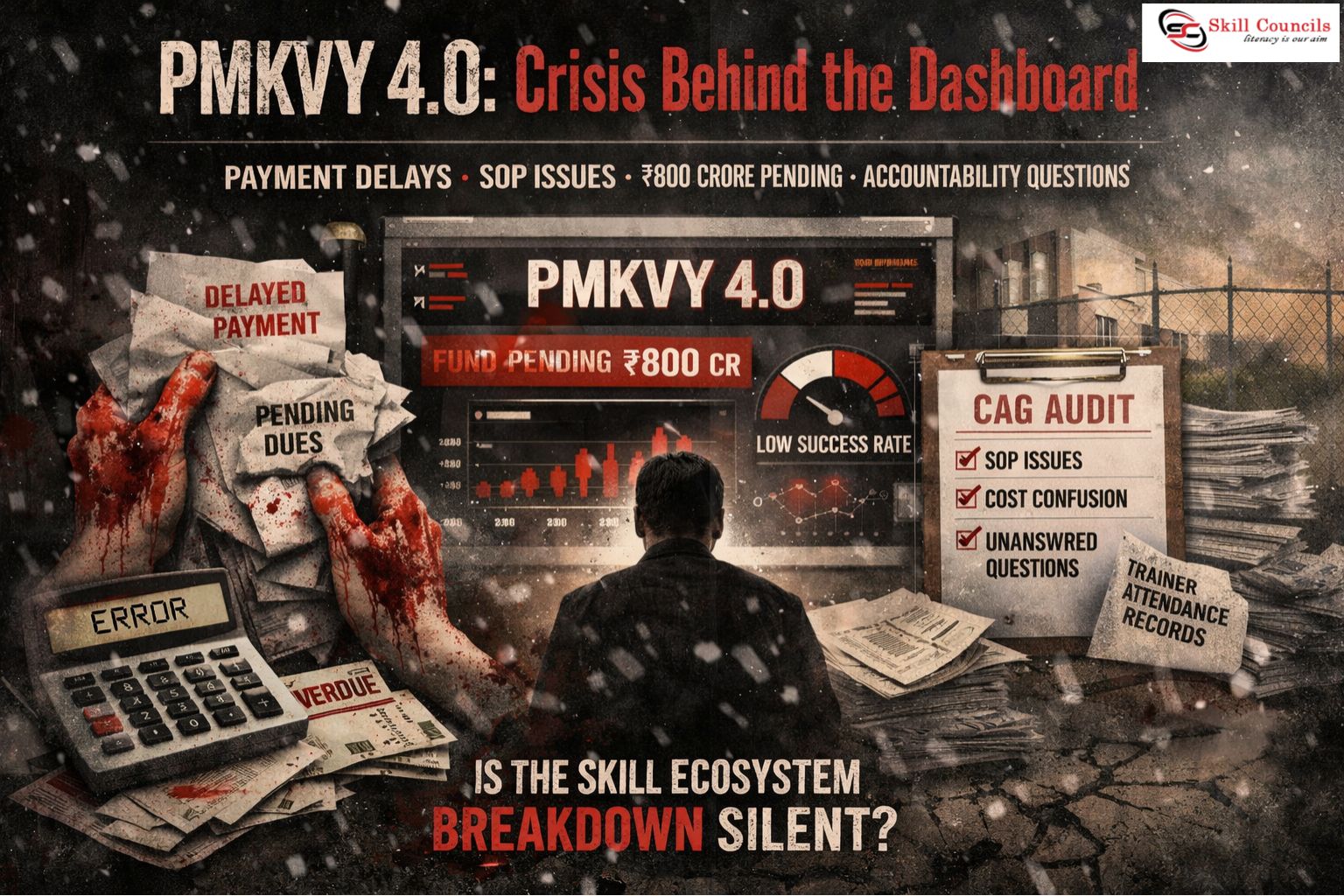
1. 📉 Decline in PMKVY Funding
- Significant drop post-2020
- Indicates transition to new models (PMKVY 4.0)
2. 📈 Rise of Apprenticeship (NAPS)
- Strong growth trend
- Focus shifting to industry-led skilling
3. 📊 Stable JSS Funding
- Continued focus on rural and inclusive skilling
⚠️ 6. Fund Utilization Challenges
Recent reports highlight:
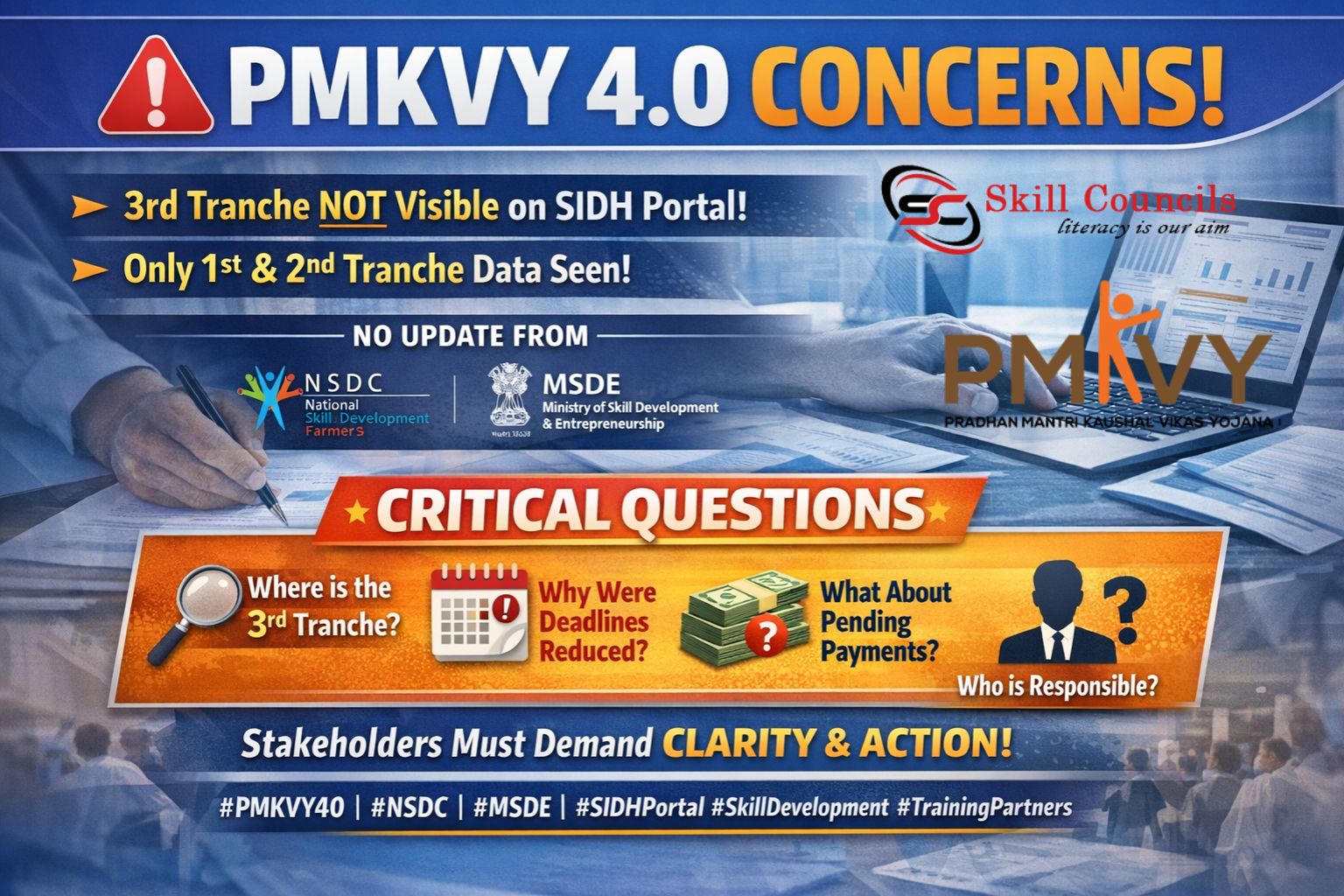
- Only ~5% utilization of allocated funds in FY 2025–26
- Concerns over:
- Implementation efficiency
- Targeting mechanisms
- Institutional bottlenecks
👉 This reflects a gap between policy design and execution
🔄 7. Continuous Changes & Emerging Trends
🔹 1. Shift to Demand-Driven Skilling
- District Skill Development Plans (DSDPs)
- Industry mapping of skill demand
🔹 2. Digital & AI Integration
- AI Centres of Excellence
- Digital credentials via DigiLocker
🔹 3. Lifelong Learning & Upskilling
- Focus on reskilling workforce
- Industry 4.0 readiness
🔹 4. Public-Private Partnerships (PPP)
- NSDC-led ecosystem expansion
- Corporate participation increasing
🔹 5. Global Mobility & International Skilling
- Alignment with global standards
- Migration-ready workforce
📈 8. Impact Analysis
✅ Positive Outcomes
- Expansion of training infrastructure
- Increased industry participation
- Formal recognition of skills (NSQF)
⚠️ Key Challenges
- Quality of training vs quantity
- Low placement rates in some schemes
- Fragmentation across states
- Monitoring & evaluation gaps
🧭 9. Role of Skill Councils & Consultants
Platforms like SkillCouncils.com play a crucial role in:
- Supporting organizations in:
- Government tenders (RFP/EOI)
- DPR preparation
- Project implementation
- Bridging gaps between:
- Government
- Industry
- Training providers
📚 10. Future Outlook
India’s skill ecosystem is moving toward:
- Outcome-based funding models
- Industry-integrated training
- AI & digital skill dominance
- Entrepreneurship-led skilling
With reforms, India aims to become a global skill capital.
Conclusion
India’s skill development landscape is dynamic, policy-driven, and evolving rapidly. While significant investments and structural reforms have been made, execution efficiency and industry alignment remain critical success factors.
For stakeholders—training providers, NGOs, CSR organizations, and consultants—understanding funding trends, eligibility, and policy direction is essential to effectively participate in Skill India initiatives.
📖 Sources & References
- Ministry of Skill Development & Entrepreneurship (PIB)
- NSDC Annual Reports
- National Skill Development Fund (MSDE)
- IBEF Skill India Overview
- CAG Report on PMKVY
- NSDC Structure & Role
- IDR Analysis on Skill Ecosystem
- Budget & Policy Updates
- Industry & Skill Reports

Recent Blogs
 in India Structure, Role, and Opportunities for Stakeholders.jpg)

.jpg)